Capital City Times
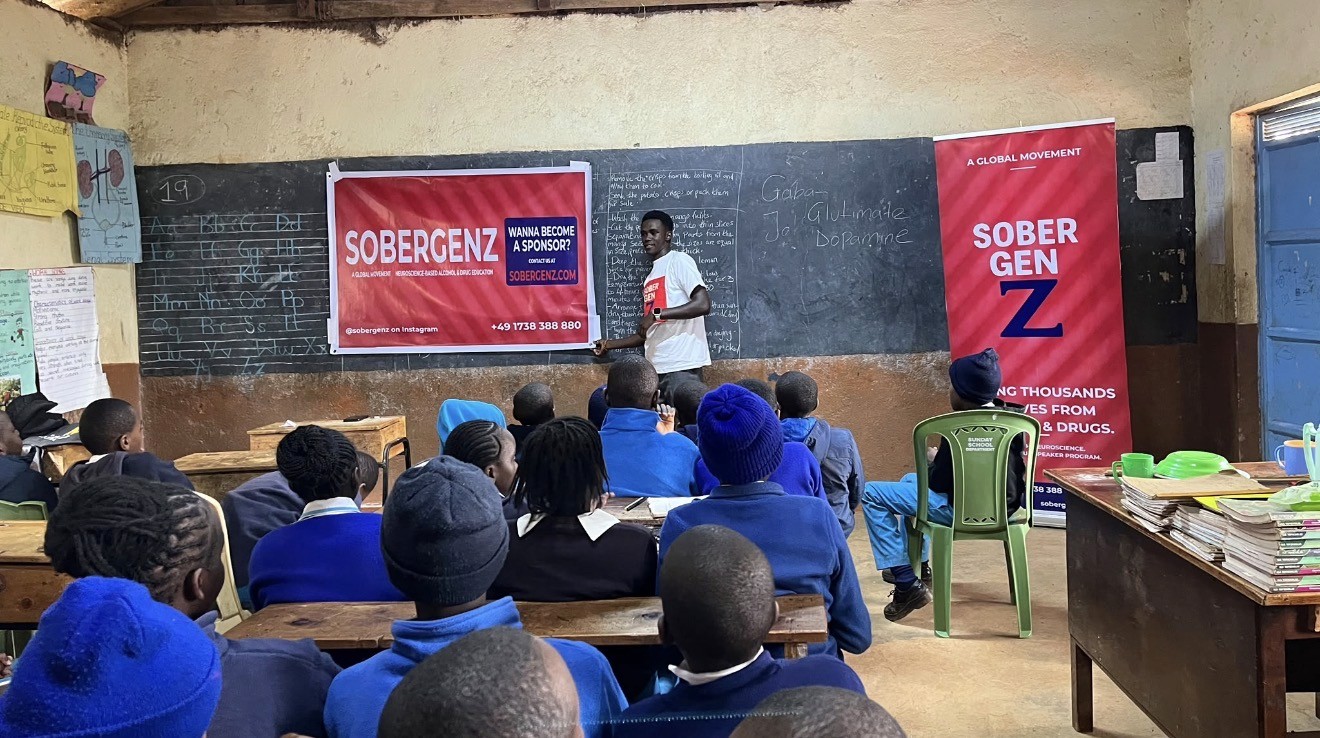
What started with a simple idea is becoming something much bigger.
SoberGenZ has now reached more than 40,000 young people.
Across schools, classrooms, sports communities and youth networks, the movement is expanding internationally — from Europe and Africa to Asia and the United States.
But the number itself isn’t the mission.
The mission is what those 40,000+ people represent.
A generation beginning to have a different conversation about alcohol, drugs, performance, mental health and the decisions that can shape the rest of their lives.
And SoberGenZ believes that conversation should be led by young people themselves.
A Different Kind of Alcohol and Drug Education
For decades, young people have been told what not to do.
Don’t drink.
Don’t take drugs.
Don’t give in to peer pressure.
The problem is that simply telling teenagers what not to do does not necessarily help them understand what is happening inside their own brains.
SoberGenZ takes a different approach.
The movement translates neuroscience surrounding alcohol and substance use into language young people can actually understand.
Instead of relying only on warnings, students learn about the brain, dopamine, decision-making, performance and the consequences that substance use can have on the person they are becoming.
The objective isn’t fear.
It’s understanding.
Because when someone genuinely understands what a decision is doing to them, they are in a much stronger position to make that decision for themselves.
From One Student to More Than 40,000
SoberGenZ was founded by Louis Stumpf, a student-athlete from Germany and Bulgaria who is now a freshman at Stanford University.
The mission became deeply personal after Stumpf watched his best friend nearly die from alcohol poisoning at the age of 15.
Instead of treating that experience as something that happened to someone else, he decided to do something with it.
That eventually became SoberGenZ.
Today, the organization reports reaching more than 40,000 young people, with outreach across more than 30 schools.
But SoberGenZ isn’t designed around one founder traveling around the world giving every presentation himself.
That would place a natural limit on how far the idea could travel.
Instead, SoberGenZ is building something designed to spread.
Students Teaching Students
At the center of SoberGenZ is a student speaker network.
Young people can become certified SoberGenZ speakers, receive the educational material and take the conversation directly into their own schools and communities.
One student can speak to a classroom.
That classroom can contain 30 students.
The same speaker can reach another class.
Then another.
Another student can do the same thing in another school.
Then another city.
Then another country.
That creates a very different model for youth education.
Instead of trying to build one organization large enough to reach every student, SoberGenZ is giving students the tools to reach each other.
The person standing at the front of the classroom doesn’t have to feel like an outsider lecturing teenagers about how they should live.
They can be someone their own age.
Someone who understands the environment they’re growing up in.
Someone who speaks their language.
From Europe to Africa, Asia and the United States
The ambition has become global.
SoberGenZ’s network and outreach are expanding across Europe, Africa, Asia and the United States, connecting young people from very different cultures around a problem that crosses borders.
The circumstances may differ.
The schools may look different.
The social pressures may be different.
But young people everywhere are making decisions that can influence their health, relationships, education, athletic performance and future.
SoberGenZ wants better information to reach them before those decisions become consequences.
Not after.
More Than an Anti-Alcohol Campaign
SoberGenZ isn’t trying to build an identity around simply saying “no.”
The larger idea is about control.
Control over your decisions.
Control over your performance.
Control over your mind.
Control over who you become.
For an athlete, that might mean understanding how substance use can interfere with performance and recovery.
For a student, it might mean understanding how decisions today can affect concentration, motivation or future opportunities.
For someone facing social pressure, it may simply mean realizing that refusing a drink doesn’t require refusing a social life.
That is why the message at the center of SoberGenZ is bigger than sobriety:
Keep control of who you become.
Sports Are Becoming Part of the Movement
The message has also moved beyond traditional classrooms.
Sports organizations and athletes are becoming part of the SoberGenZ ecosystem.
That matters because the conversation changes when substance use is framed through performance.
Young athletes understand competition.
They understand recovery.
They understand what it means to spend months improving by fractions — getting faster, stronger or more technically skilled.
SoberGenZ can meet those students through something they already care deeply about:
their potential.
The movement has already developed relationships with sporting communities, including CSKA Judo Club Sofia, while the American School of Barcelona’s varsity basketball community has also supported the initiative.
The long-term opportunity is much larger.
Schools, teams, coaches, athletes and youth organizations can all become distribution points for the same message.
Real Experience Matters Too
Science explains what substances can do.
Human experience explains what those consequences can feel like.
SoberGenZ is increasingly bringing both together.
Its partnerships include Fundación Lázaro in Barcelona, an organization working with people rebuilding their lives after addiction.
That creates opportunities for young people to hear from individuals who understand the consequences of substance abuse not from a textbook, but from experience.
There is a major difference between being told that something can damage your life and meeting someone who can tell you exactly how it affected theirs.
Both perspectives matter.
40,000 Is Not the Finish Line
Reaching more than 40,000 young people is a milestone.
But for SoberGenZ, it is evidence that the model can travel.
The organization has set its sights on reaching 100,000 young people before 2027.
And after that?
The opportunity becomes much larger.
Every certified speaker creates another potential point of expansion.
Every participating school creates another community.
Every athlete, teacher, youth leader, organization and supporter who joins creates another way for the message to reach someone who might need it.
That is how movements scale.
Not because one person speaks louder.
Because thousands of people begin carrying the same idea.
A Global Movement Built by the Generation It Wants to Help
There are millions of young people who will make decisions about alcohol and drugs long before they fully understand the consequences.
SoberGenZ wants to reach them earlier.
Before the hospital visit.
Before the addiction.
Before the accident.
Before a night becomes something that changes a family forever.
And it wants Gen Z itself to lead that conversation.
More than 40,000 young people have already been reached.
Schools are joining.
Athletes are joining.
Organizations are joining.
Student speakers are joining.
And the map is getting bigger.
Africa. Asia. Europe. The United States. And this is only the beginning.
If you’re a student who wants to bring SoberGenZ to your school, an organization that wants to support the movement, or someone who simply believes young people deserve better information before making life-changing decisions, there is a place for you in what comes next.
Join SoberGenZ. Spread the message. Keep control of who you become.



Latest Post

Pat Abel
Sep 17, 2026
Pat Abel
Sep 17, 2026

Pat Abel
Sep 4, 2026

Pat Abel
Aug 28, 2026