Capital City Times
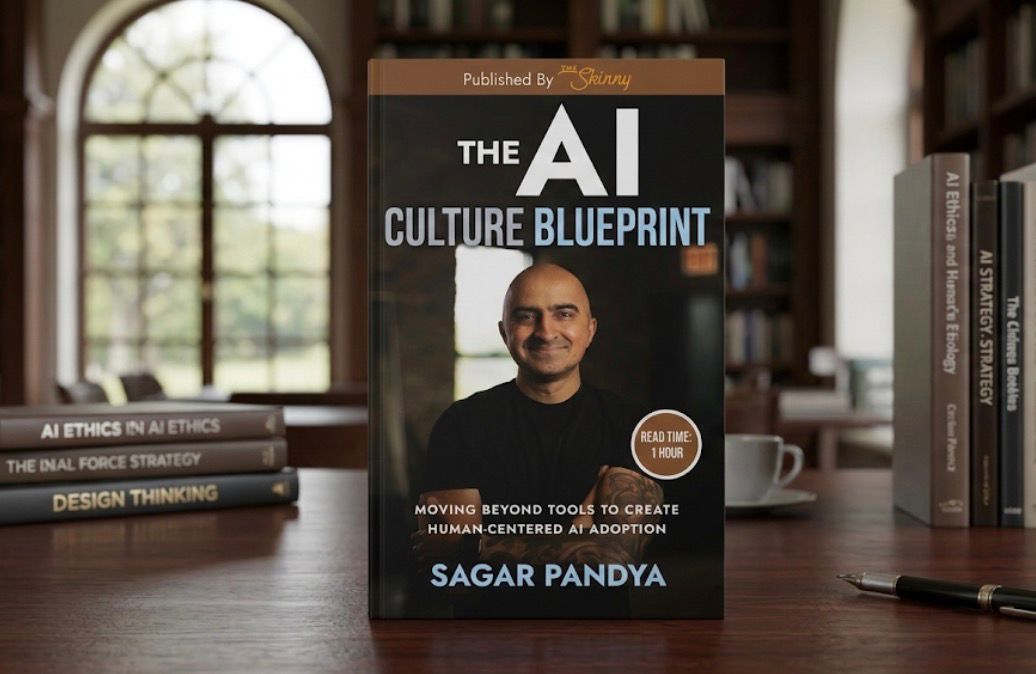
The AI Culture Blueprint by Sagar Pandya: Why AI Transformation Starts With People, Not Technology
Artificial intelligence is often framed as a technological revolution. Businesses race to implement new platforms, automate workflows, and integrate machine learning into decision-making. Billions of dollars are spent every year on AI tools with the expectation that they will unlock productivity, innovation, and competitive advantage. Yet for many organizations, the results fall short of expectations. According to consultant and exited founder Sagar Pandya, the reason is surprisingly simple: AI transformation fails not because of weak technology, but because companies overlook culture.
Pandya, a serial entrepreneur and AI strategist with more than twenty years of experience across IT, cybersecurity, and digital transformation, has spent much of his career helping organizations navigate complex technological change. As the founder of The AI Culture Company and the former leader of a 50-person AI consulting organization following an acquisition, he has seen firsthand how organizations approach AI implementation—and where those efforts often break down.
His central thesis is clear: the biggest barrier to AI adoption is not software, infrastructure, or algorithms. It is people.
In his book The AI Culture Blueprint, Pandya outlines why so many AI initiatives stall even after companies invest heavily in the latest tools. The issue, he argues, lies in what he calls the “AI culture lag.” Technology evolves rapidly, but organizations change slowly. Leaders may deploy sophisticated AI systems, yet employees remain uncertain about how these tools affect their roles, responsibilities, and professional identity.
This disconnect creates friction inside organizations. Employees may quietly resist AI systems because they fear job displacement or feel excluded from the transformation process. Others may simply lack the training and confidence needed to integrate AI into their daily workflows. Meanwhile, executives become frustrated when the expensive technology they purchased fails to deliver meaningful results.
Pandya believes this pattern reflects a deeper misunderstanding about what AI transformation really requires. Many organizations treat AI like a typical software rollout—purchase the tool, integrate the system, and expect results. But in reality, AI changes how people work, collaborate, and make decisions. Without addressing the human side of this shift, even the most powerful tools struggle to gain traction.
This is where The AI Culture Blueprint provides a different perspective. Rather than focusing on technical implementation alone, Pandya presents a leadership-focused framework designed to help organizations build an AI-ready culture. The book argues that successful AI adoption depends on trust, communication, and psychological safety as much as it does on algorithms and infrastructure.
At the core of Pandya’s approach is what he calls the “5C framework”: Commit, Communicate, Co-Create, Coach, and Cultivate. Each component represents a practical step for leaders who want to bridge the gap between technology and culture.
Commit begins with leadership alignment. Executives must clearly articulate why AI matters for the organization and demonstrate long-term commitment to the transformation. Without visible leadership support, employees may assume AI initiatives are temporary experiments rather than strategic priorities.
Communicate emphasizes transparency. Teams need to understand how AI will influence their work, what opportunities it creates, and how leadership plans to support employees through the transition. Clear communication helps reduce uncertainty and build trust.
Co-Create encourages organizations to involve employees directly in shaping AI adoption. Instead of imposing systems from the top down, leaders can collaborate with teams to identify how AI tools fit into real workflows and daily responsibilities.
Coach focuses on education and skill development. AI adoption cannot succeed if employees feel unprepared or intimidated by new technology. Structured learning and ongoing guidance allow teams to build confidence in using AI effectively.
Finally, Cultivate highlights the ongoing nature of cultural transformation. AI adoption is not a one-time event but a continuous process of adaptation, experimentation, and leadership reinforcement.



Latest Post


Pat Abel
Aug 28, 2026

Pat Abel
Aug 16, 2026

Pat Abel
Aug 10, 2026

Pat Abel
Aug 5, 2026